

Mental Meanderings — Community Outreach
Mental Meanderings is an opportunity to explore what we’ve learned about mental health— teach, learn, share experiences, or just walk with your community on the Ski Hill Trail in Soldotna, Alaska.
Our mission, is to bring ease to discussing mental health as well as exploring challenges, potential solutions, and general protocols to improve mental wellbeing, particularly in our unique Alaskan environment. We are looking for knowledgeable professionals who want to connect with their community, share their gifts, and reduce mental health stigmatization.
The idea is to meet on the first and last Saturday of each month, at 12pm— sharing/learning everything you can on the first Saturday, then following up and reflecting on any changes you’ve noticed/implemented in your life on the last Saturday. At the very least— enjoying a communal walk on a well maintained trailhead with kindred spirits who strive for positive change in our community.
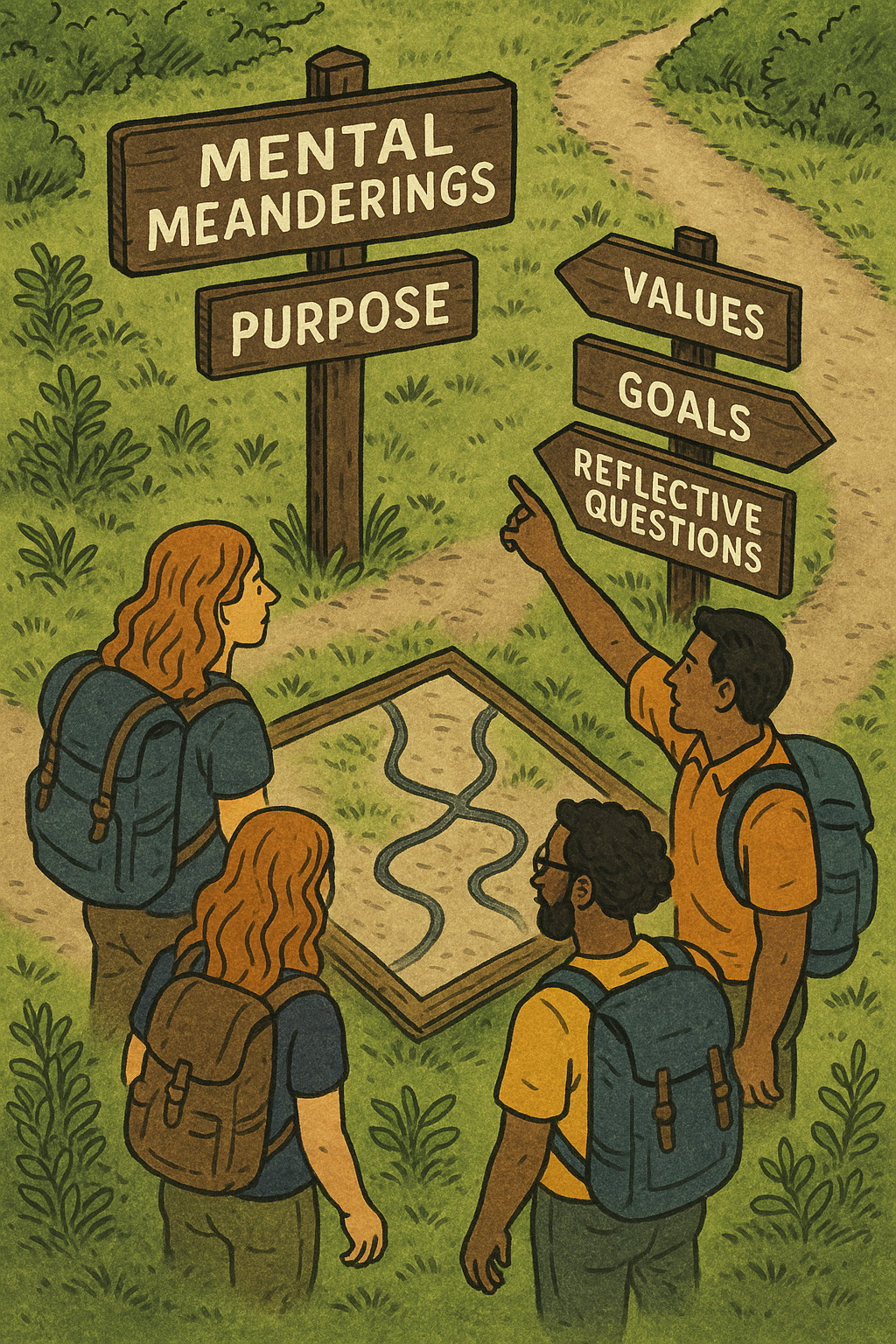
Purpose
Meandering about the purpose of our lives, why it matters, and how
we can nurture or create purpose when we feel like we have none.

Mindfulness
Drawing on what we’ve learned about our body’s needs, our
somewhat limited attention spans, and our ability to improve both
our focus and resilience to home in on what being mindful really is
on a day to day, moment to moment, feeling to feeling basis.
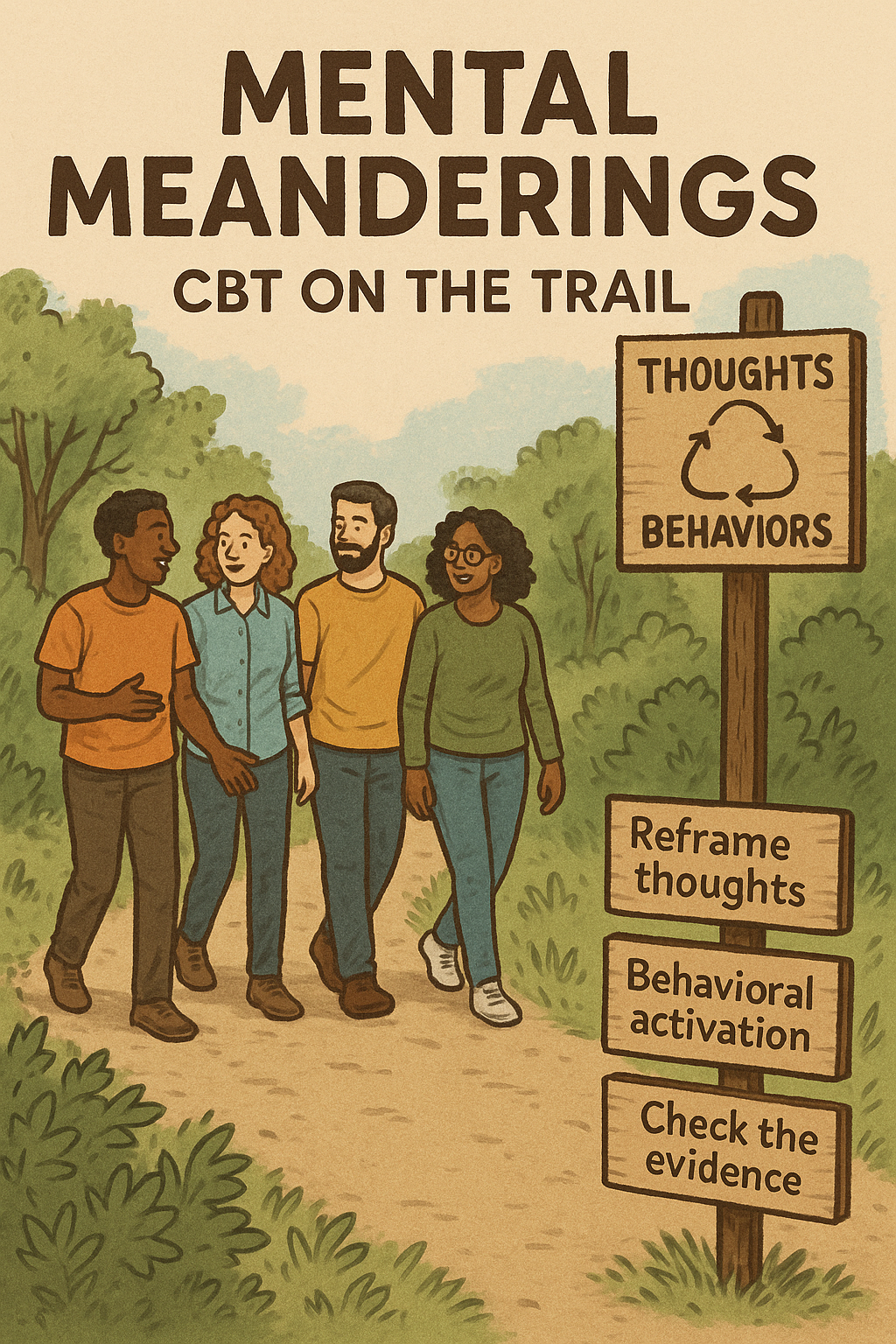
Mental Programming (CBT)
Meandering about the ways we can change the way we react to
unhealthy thought patterns, Automatic Negative Thoughts (ANTS),
and other mental tricks we’ve learned along the way.
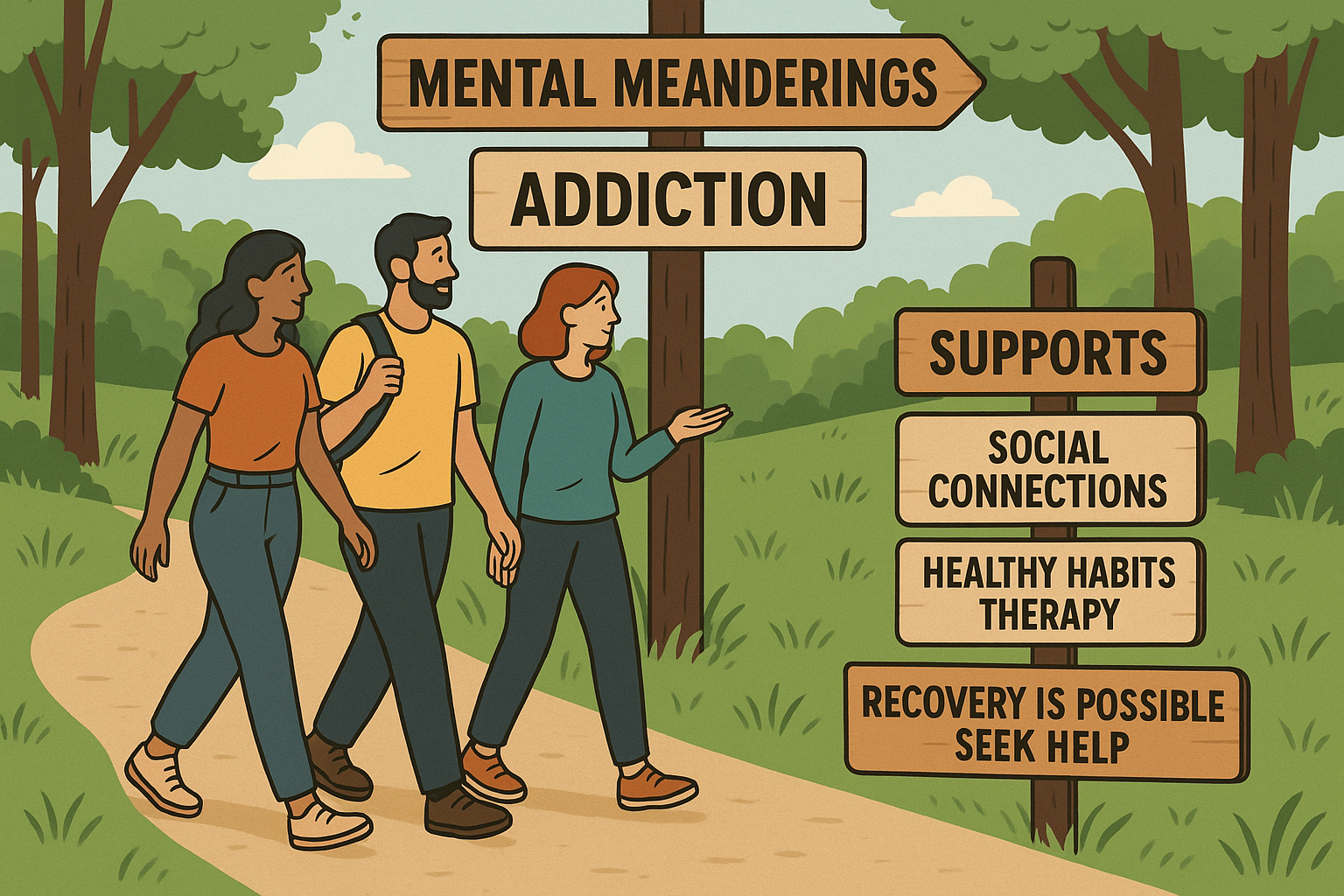
Addiction (Self-Regulation)
Meandering about the ways that both unconscious and conscious
compulsions can keep us coming back to various substances and
activities that we may or may not want to continue interacting with.
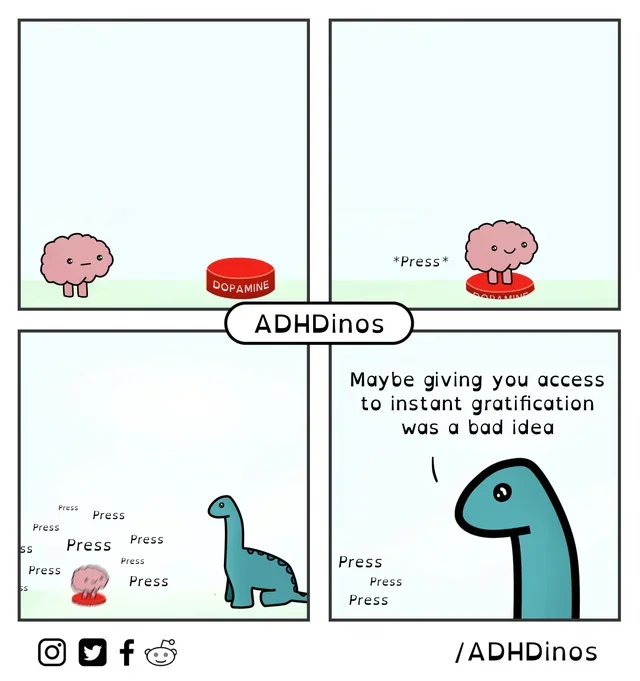
Image courtesy of ADHDinos, check out their comics!
Addiction and Self-Regulation
A practical 2-page guide (inspired by Dopamine Nation + neuroscience)
Mental Meanderings | www.livingcatalyst.org/mentalmeanderings
Quick takeaways
· Addiction is a learning disorder: the brain over-values a reward and under-values everything else.
· Dopamine is more about wanting and reinforcement than simple pleasure - it teaches the brain what to chase next.
· Repeated high-reward exposure shifts your baseline: less joy from normal life, more discomfort when not using.
· Self-regulation improves fastest when you change your environment + add supports (not just 'try harder').
If you may have dangerous withdrawal (alcohol, benzos, some meds), do not stop suddenly - get medical help.
What addiction does to the brain
· The reward circuit (VTA -> nucleus accumbens -> prefrontal cortex) uses dopamine to tag experiences as 'important' and worth repeating.
· Drugs, gambling, porn, ultra-processed foods, endless scrolling, and binge gaming can deliver high-intensity reward signals - fast, frequent, and predictable.
· With repetition, the brain adapts: tolerance (need more for the same effect), withdrawal (feel worse without it), and stronger cue-triggered craving.
The pleasure-pain seesaw (Anna Lembke’s big idea)
· Pleasure and pain are linked in the brain. A big dopamine 'up' is often followed by a compensating 'down' (irritability, anxiety, flat mood). Homeostasis at work.
· If you keep chasing the up, the brain defends itself by tilting toward pain: the baseline drops (anhedonia), and you need the behavior just to feel normal.
· Paradox: short-term relief can create long-term discomfort - which then drives more use.
The addiction cycle (why cravings return)
· Binge / intoxication: the reward becomes the main priority.
· Withdrawal / negative affect: stress systems turn up; relief becomes the goal.
· Preoccupation / anticipation: cues + memories hijack attention and planning.
Why willpower isn't enough
· The prefrontal cortex (planning, inhibition) is easily weakened by stress, sleep loss, pain, hunger, and strong emotion.
· Cues are powerful: people, places, time of day, and even feelings can become automatic triggers.
· Shame fuels secrecy, which fuels relapse. Recovery works better in the open.
----------------------------------------
Self-regulation toolkit: build a plan that wins
· Make the 'good' easy and the 'bad' hard: change cues, add friction, reduce access.
· Start with one target behavior (the biggest pain-to-payoff ratio). Track it - data beats vibes.
· Aim for progress, not perfection. If you slip, treat it as a learning experience, not a failure.
A 30-day reset (Lembke-style)
1. Pick one high-dopamine behavior to pause for 30 days (substance or process addiction).
2. Remove cues: delete apps, change routes, clean the house, avoid high-risk people/places.
3. Expect discomfort days 1-14 (restlessness, low mood, cravings). This is your brain rebalancing.
4. Add 'healthy pain': exercise, cold exposure, hard conversations, service, learning - effort-based rewards.
Tip: Pair abstinence with support (therapy, groups, peer support, trusted friends).
Craving first aid (use one in the moment)
· The 10-minute delay: set a timer, breathe, and promise yourself you can choose again when it ends.
· Urge surfing: notice the urge rise, peak, and fall like a wave (most urges pass if you don't feed them).
· HALT check: Am I Hungry, Angry, Lonely, or Tired? Fix the state before you judge the craving.
· Swap the stimulus: water + protein, a short walk, a shower, a text to someone safe, or change rooms.
Evidence-based help (stronger than white-knuckling)
· Medications can save lives. For opioid use disorder: buprenorphine, methadone, or naltrexone. For alcohol use disorder: naltrexone, acamprosate, or disulfiram (ask a clinician).
· Skills-based therapies (CBT, ACT, motivational interviewing), mutual-help groups (AA/NA, SMART), and recovery coaching/peer support improve outcomes.
· If you use to manage trauma, anxiety, or depression, treating the 'why' reduces relapse risk.
When to get urgent help
· Possible dangerous withdrawal (alcohol, benzodiazepines): tremor, confusion, hallucinations, seizures - seek medical care.
· Overdose risk, suicidal thoughts, or inability to stay safe: call/text 988 (U.S.).
Resources
· SAMHSA National Helpline: 1-800-662-HELP (4357) - free, confidential treatment referrals (24/7).
· FindTreatment.gov - treatment locator (U.S.).
· Talk to your primary care clinic or behavioral health provider about options near you.
Educational handout - not medical advice. If you have symptoms of withdrawal or emergency risk, seek immediate care.
Sources for Handout
Lembke, A. (2021). Dopamine Nation: Finding balance in the age of indulgence. Dutton.
National Institute on Drug Abuse. (2020, July 6). Drugs, brains, and behavior: The science of addiction (online publication). National Institutes of Health.
Volkow, N. D., Koob, G. F., & McLellan, A. T. (2016). Neurobiologic advances from the brain disease model of addiction. New England Journal of Medicine, 374(4), 363–371. https://doi.org/10.1056/NEJMra1511480
Koob, G. F., & Le Moal, M. (2001). Drug addiction, dysregulation of reward, and allostasis. Neuropsychopharmacology, 24(2), 97–129. https://doi.org/10.1016/S0893-133X(00)00195-0
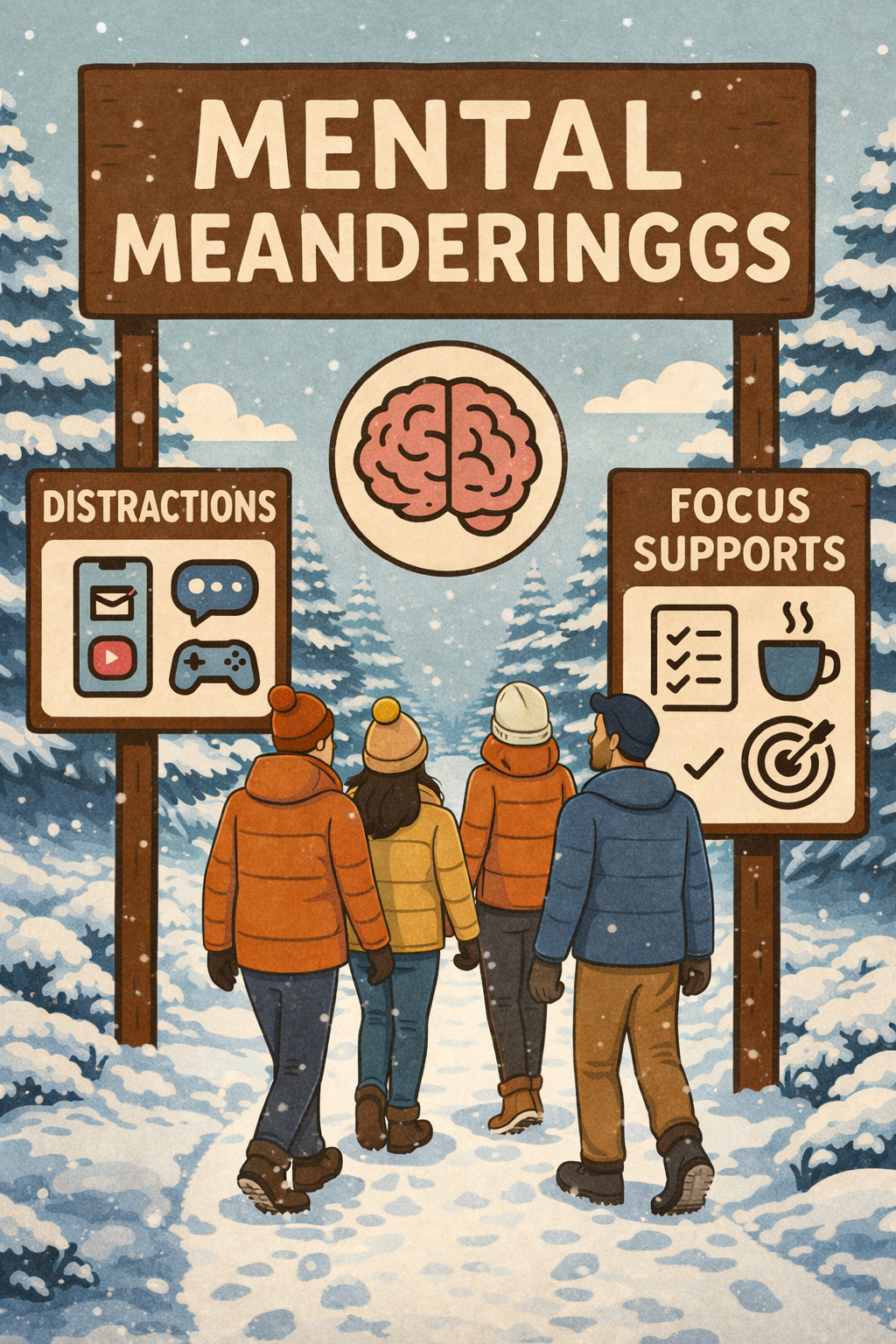
Focus & Attention
Meandering about the ways our mental focus ebbs and flows, how
we can harness and train that focus, and what might be hindering
our ability to pay attention.
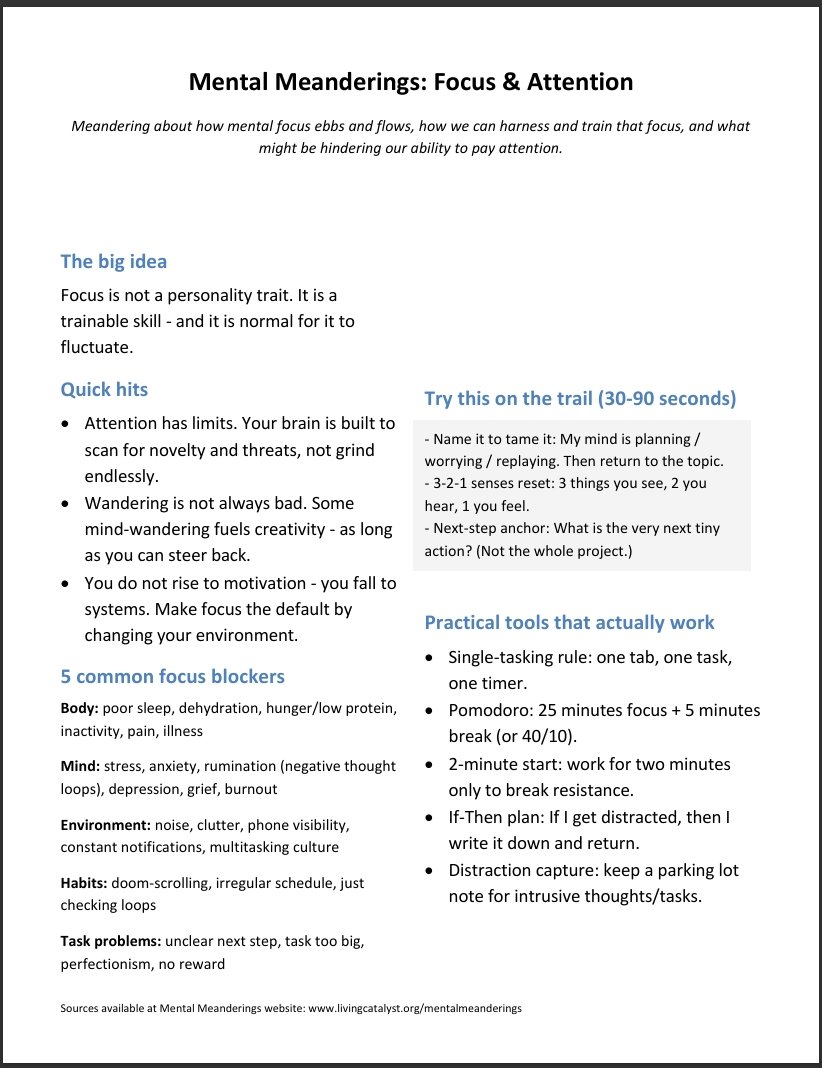
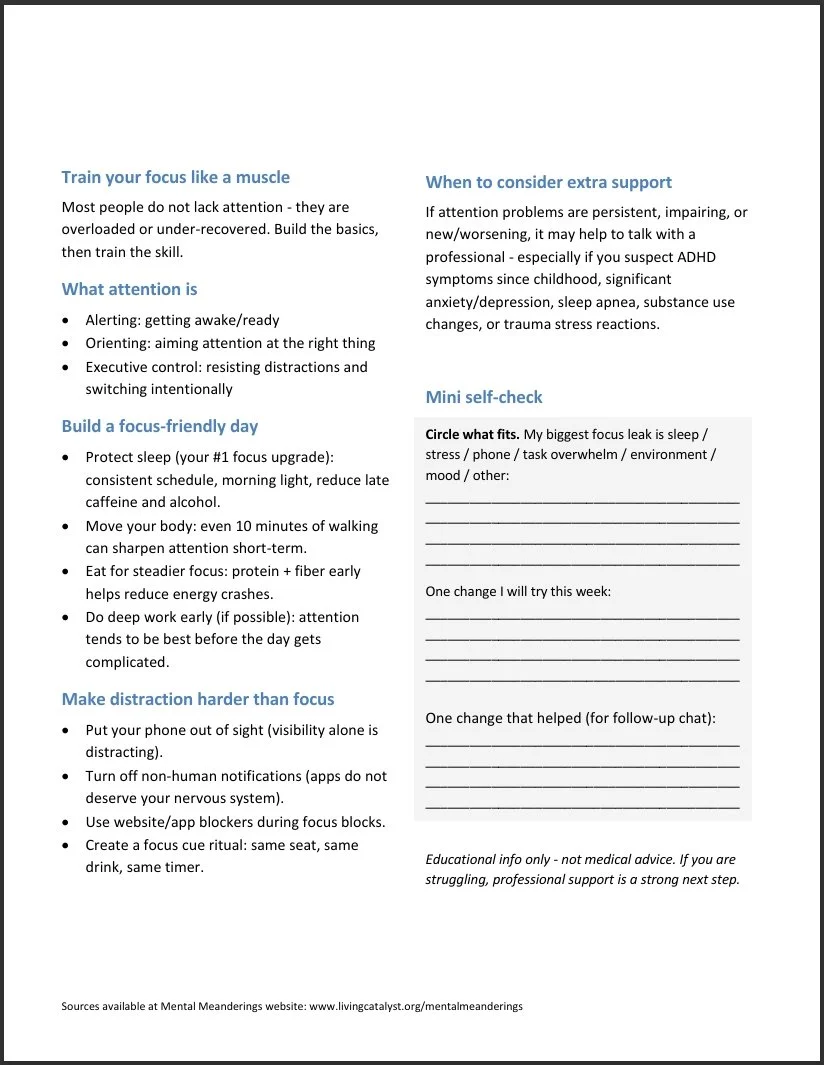
Sources for information on Januarys handout:
1) “Attention has components (alerting / orienting / executive control).” PubMed+1
2) “Sleep is a major driver of attention + performance.” (meta-analysis) PubMed
3) “Brief breaks can help prevent vigilance/attention drop-off.” PubMed+1
4) “Notifications disrupt attention even if you don’t check the phone.” PubMed
5) “Phone presence (even unused) can reduce available cognitive capacity.” Health Professionals For Safer Screens+1
6) “Multitasking / heavy media multitasking is linked with worse cognitive control/filtering.” PubMed
7) “Task switching has measurable time/accuracy costs.” PubMed
8) “Mind-wandering can support creative incubation (in the right conditions).” PubMed
9) “Affect labeling (‘name it’) can reduce emotional reactivity in the brain.” PubMed+1
10) “If–Then plans (‘implementation intentions’) reliably help follow-through.” (meta-analysis) ScienceDirect+1
11) “Nature exposure can help restore directed attention (Attention Restoration Theory).” SCIRP+1
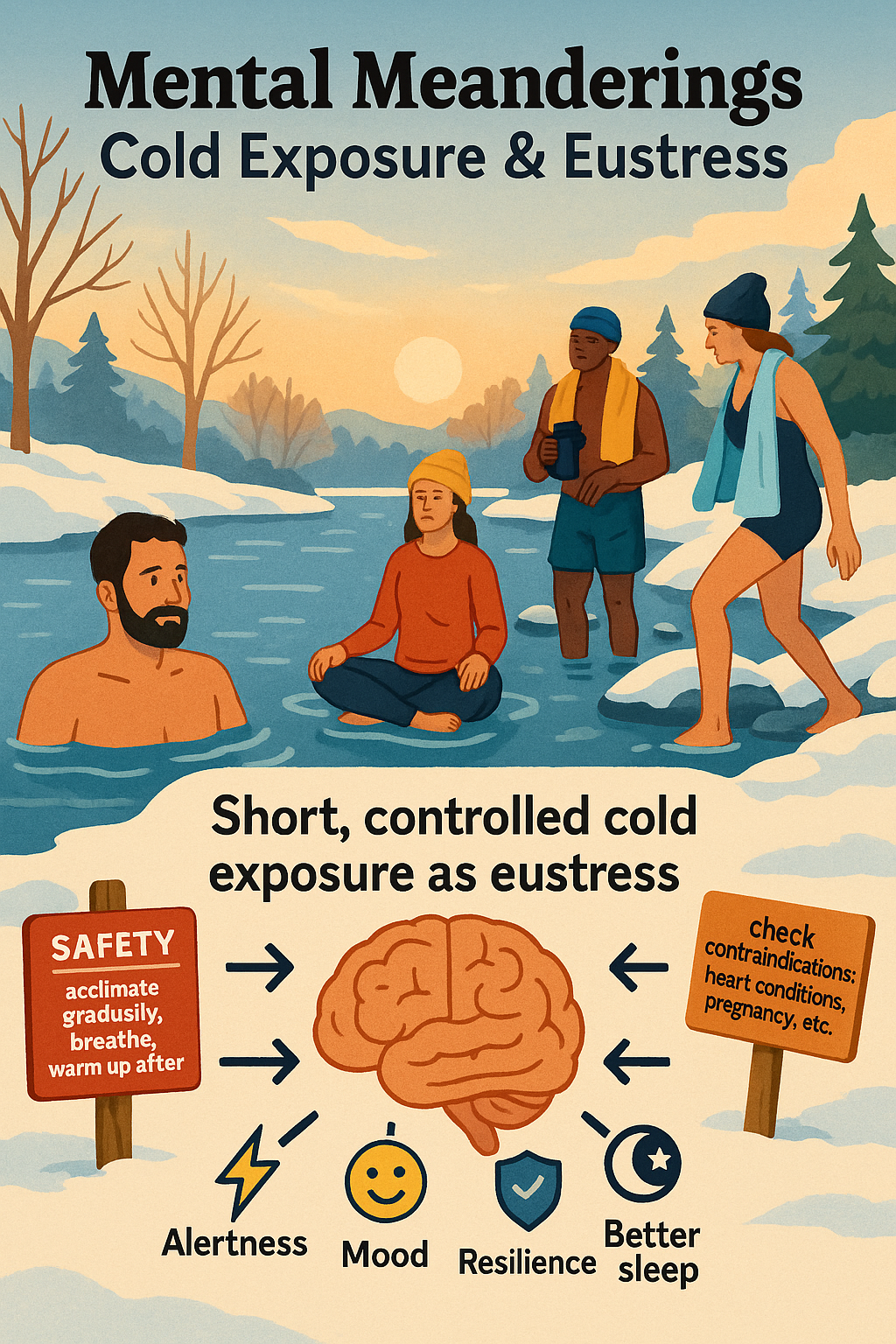
Cold (Eustress) Exposure
Meandering about the ways that exposing our bodies to cold, heat,
and other bodily stressors can harden and strengthen us both
physically and mentally. First and last Saturday of December.
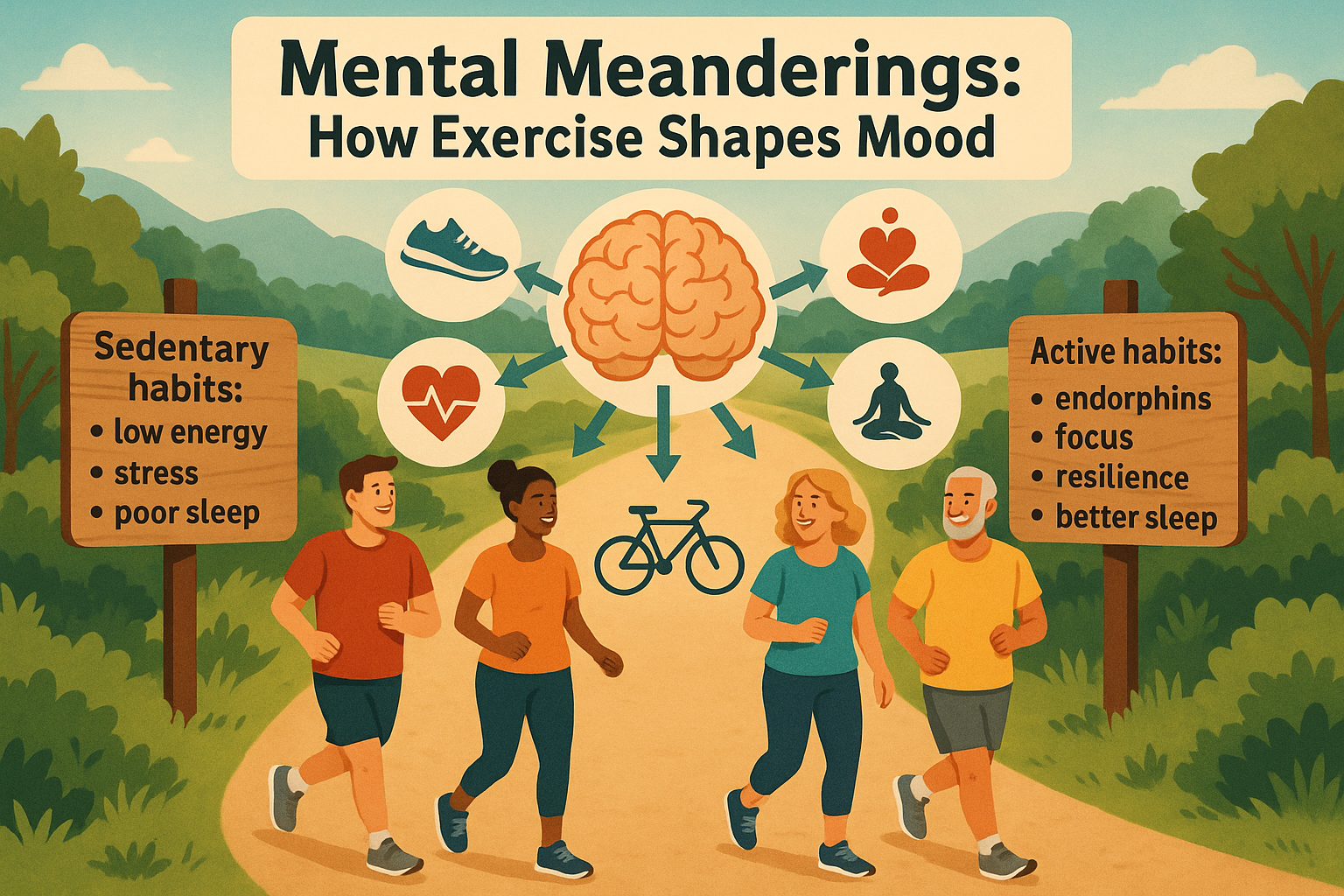
Exercise
Meandering about various forms of movement, how we motivate ourselves to do so, and how exercise increases not only our physical strength but also our mental resilience.
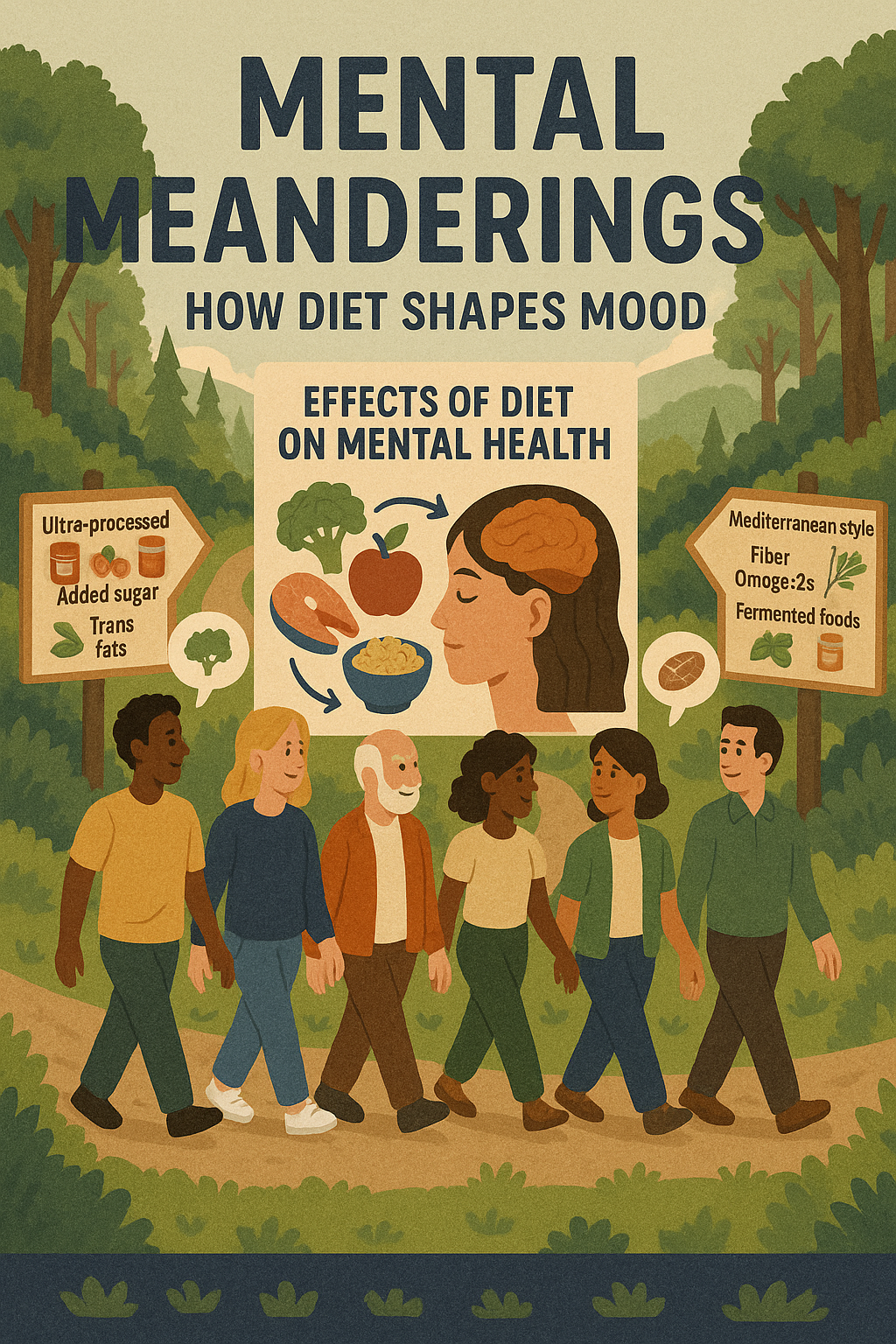
Diet
Meandering about nutritional needs and the various tools we use to maintain a healthy diet, how our diets effect our mental health, as well as sharing our favorite healthy cheat meals worth sharing.

Sleep
Meandering about the value in creating and maintaining good sleep habits as our midnight sun begins to dissipate.